
Mammod Tukur, the Second Vice Chairman of the Depots and Petroleum Products Marketers Association of Nigeria (DAPPMAN), made the call and stated that both agencies had not yet complied with the government's mandate issued almost one year ago.
In a communiqué published jointly by the chiefs of the NMDPRA, NNPC, MOMAN, and DAPPMAN in November 2021, the government mandated that port fees be collected in naira through its downstream regulator and based on consensus among stakeholders.
Since the mandate was issued, however, the agencies have continued to collect the fees in U.S. dollars.
Tukur stated, "A few years ago, the Vice President presided over a meeting that included the Chief of Staff, where it was discussed that the requirement for marketers to pay port fees to NPA and NIMASA in dollars is no longer acceptable since it has a negative impact on the industry."
The recommendation that these agencies should begin charging marketers in naira has not yet been enforced. That is a formidable obstacle." The dollar's price is practically determined by demand. If there is no supply, the price will climb. In this situation, port fees must be paid in U.S. dollars whenever a ship needs to dock.
Tukur continued, "However, it can be paid for using naira." This is one method for really removing demand (for dollars) from the market, which will reduce the foreign exchange consequences.
Why do the NPA and NIMASA charge in dollars if these products are used locally and intended for local ports?
"They should simply implement a government mandate, and we guarantee that this would also reduce the price of petroleum goods."
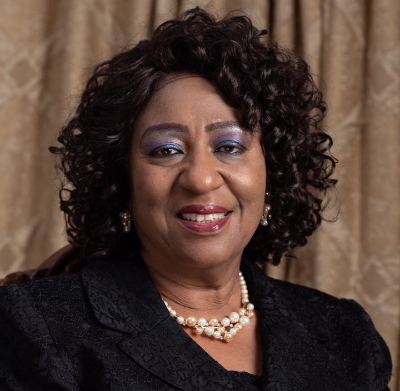
Winifred Akpani, chairwoman of DAPPMAN, elaborated on how the foreign exchange dilemma affected petroleum marketers.
She stated, "For instance, to charter a vessel to transport 20,000 metric tonnes of PMS within Nigeria for ten days, freight charges are denominated in dollars; this amounts to approximately N220 million at an official forex rate of N440 and a whopping N440 million for petroleum marketers who must source forex from the parallel market at N880."
This entails an additional cost of N11 per gallon for this transaction due to the difference between the official and parallel FX markets." Again charged in dollars, jetty fees for this transaction are N15.4 million at official exchange rates and N30.8 million for petroleum marketers who source from the illegal market. Similarly, Jetty Berth is billed in dollars and costs N2,200,000 at the official exchange rate and N4,400,000 at the black market rate. Then there are port dues (NPA and NIMASA), which are levied in dollars and amount to N71.51 million at the official exchange rate and N142.796 million for marketers who obtain foreign currency on the black market.
This, according to Akpani, is burdensome and has made operational expenses and procurement more difficult for DAPPMAN members.
She claimed that despite this, petroleum marketers are still obliged to compete unfavorably with the NNPC, which had access to foreign exchange at the CBN exchange rate and the extra advantage of getting items via swap arrangements.
She stated, "With the acquisition of OVH, the NNPC, which previously served as the supplier of last resort, is now the largest oil downstream company in Nigeria and has full access to dollars at the CBN's official rates."
"Without a level playing field, especially one that guarantees access to dollars for all marketers at official rates, the ability of marketers to import products is persistently and severely hampered, as a significant portion of their operations and crucial operational and capital expenses are denominated in dollars."
When access to foreign exchange at official prices is allowed to all operators and all subsidies are eliminated, the availability of all items, especially PMS, would increase significantly.