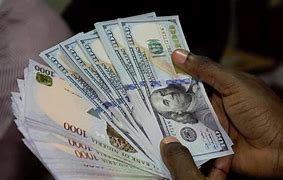

Last week, the naira fell as low as N880 per dollar in various street markets. Last Thursday, the situation reached a tipping point, with some dealers quoting N900 per dollar.
As of yesterday morning, a few dealers were engaged in bargain transactions in the Lagos neighbourhoods of NAHCO, Yaba, and Ejigbo. However, by 6:00 p.m., the naira had dropped to between N750 and N800. While Aboki Forex, a market tracking app, quoted N798 as the buying rate and N800 as the selling offer, independent dealers had said they would not buy or sell above N750 for a dollar. The findings, however, suggested that the drop was caused by a lack of market direction rather than a new price equilibrium.
The supply is still very limited. For example, a dealer disclosed that he has a $5 million request but that "there is nowhere I can get the money because people are not selling." A different source cited the arrest of some dealers by officials of the Economic and Financial Crimes Commission as the reason for the price suddenly losing its last week's peg (EFCC).
"Some of those arrested are major drug dealers." Those are the people who set our prices. Nobody can predict the market if they do not provide direction. I believe we will know the new price once they have settled. Nobody knows whether the exchange rate will rise or fall at that point," a trader stated.
Remember that there was an increase in market activity last week, with large sums of cash released to clean up the black market. For the first time, market arbitrage reached 100%, sending shockwaves throughout the market.
The Central Bank of Nigeria (CBN) will begin issuing redesigned N200, N500, and N1000 banknotes on December 15, with the old ones expected to be phased out by January 31, 2023.
The plan is seen as a major step toward eradicating black money, which the apex bank has described as a major distortion with implications for inflation, exchange rates, and cash management.