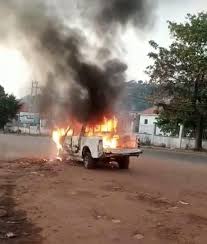

IPOB ordered a sit-at-home last year to protest the incarceration of Nnamdi Kanu, its leader, who is on trial for treason and terrorism.
On August 14, 2021, the group suspended the injunction until Kanu appears in court.
SBM Intelligence, Nigeria's geopolitical intelligence platform, conducted the research for DevEast.
The study included surveys, in-depth interviews, and focus groups.
Report focused on transporters and traders/artisans.
Transporters lose N10-N13 billion per protest.
Transporters in the five south-east states lose between N10 billion and N13 billion per day of the sit-at-home protest, according to a report.
"Abia, Anambra, Ebonyi, Enugu, and Imo have an estimated 1,083,000 commercial cars"
This information comes from the National Bureau of Statistics' Q2 2021 road transport data report.
In 24 months, trading enterprises lost N655 billion to N3.8 trillion.
Small and medium-sized businesses, largely in trade and commerce, and artisans lost between N655 billion and N3.8 trillion in 24 months.
SME Survey 2021 data suggests that south-east enterprises generate between N5.4 billion and N31 billion daily.
"If they lost five days a month from October 2020 (24 months), nearly 120 days have been lost, which takes the quantity of lost wages on simply stay-at-home days to between N655,382,338,560 and N3,766,308,111,480 so far."
Large-scale losses can be connected to specific issues, like the loss of four to five working days per week, employment losses owing to business owners' reductions, and other missed possibilities.
Other concerns include client and customer loss due to the unpredictable economic environment in the southeast and increased service delivery expenses due to logistics expenditures.
According to DevEast, "unknown shooters," the Eastern Security Network (ESN), Ebube Agu, and military operations in the zone, IPOB agitations, and the 2020 #EndSARS rallies intensified the security situation and contributed to the losses.
EBONYI's greatest impact is violence.
Violence was utilised to enforce the sit-at-home as defaulters were threatened with devastation and property loss.
Although all states experienced violence and threats of violence, Ebonyi State respondents saw more antagonism.
No government businesses
Despite concerns from businesses, NGOs, and people about losses, there has been no government intervention or support, according to the report.
It noted that agitations, violence, and the constituted authorities' inability to control security in the region have further eroded public trust in political and community leaders due to their seeming powerlessness.
DevEast recommended state governments to implement intervention strategies to improve people's liquidity and help them use those resources to lubricate the southeast economy in the short run.